Harnessing the Sun: A Practical Path to a Warmer Pool
I still remember the first morning I dipped into our pool in early spring, braving waters that held onto the night’s chill like a stubborn memory. The sun was out, the birds had returned, but the water? It still belonged to winter. That day, as I towelled off and sipped my coffee under the budding maple, I promised myself: there must be a better way to warm the water—and not just better, but natural, efficient, and kind to the planet we love so dearly.
That journey led me to solar energy. And what a sunlit path it’s turned out to be. Today, let’s explore how you, too, can soak in the benefits of solar heating for your swimming pool—gently, efficiently, and with a little poetry too.
Why Solar? The Practical Beauty of Sunshine
Solar power isn’t just for rooftops and calculators. When applied to your pool, it becomes an elegant solution that aligns functionality with ecological responsibility. At its core, heating your pool with solar energy means using the sun’s radiant warmth—something freely available, beautifully sustainable, and surprisingly efficient when harnessed correctly.
Imagine this: the sun beating down on your garden is not just lighting your blooms, but also fueling your afternoon swim. It’s not only romantic—it’s realistic.
Understanding How Solar Pool Heating Works
Let’s unpack the science, without getting lost in the jargon. A solar pool heating system typically includes the following elements:
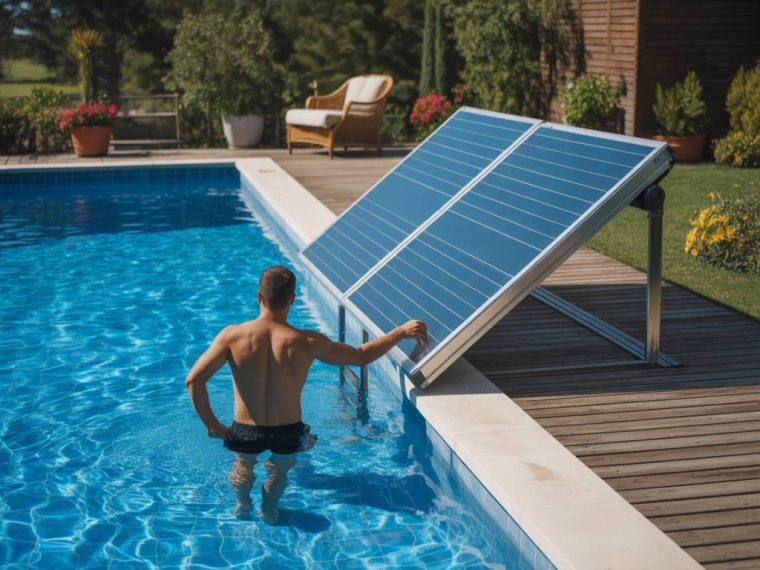
- Solar collectors: Panels installed on your roof or on a suitable surface. Water is pumped through these, warming up as it flows.
- Filter: Removes debris before water hits your collectors. (Clean panels = happy heating.)
- Pump: Circulates the water through the filter, into the collectors, and then back into your pool, now a few delightful degrees warmer.
- Controller: Often paired with a thermostat, allowing you to regulate the system and optimise performance depending on the day’s sunshine and your swimming desires.
The system can be automated to turn on when the sun is out and temperatures call for a warm-up—leaving you free to focus on tending to the wisterias or planning a moonlit swim.
Placement Matters: Catching Every Drop of Sunshine
Sunlight is a treasure—but only if you can catch it. That’s why orientation and placement of the solar collectors are absolutely crucial.
The ideal orientation depends on where you are located. In the UK, solar panels perform best when facing due south and tilted at approximately 30 to 40 degrees. But there’s room for flexibility. East or west-facing arrays can still perform admirably, especially if they receive sun for the bulk of the day.
In my own garden, the guesthouse roof turned out to be a perfect perch for the collectors—daily bathed in sunlight, and unobtrusive to the eye. That’s the sweet spot: functional, but not intrusive upon the harmony of your outdoor space.
Efficiency Tips: Warming Smartly, Not Just Warmly
A common myth is that once you’ve installed solar, the job is done. In truth, like any garden, a solar system yields its best when given a bit of nurturing. Here’s how to get the most out of it:
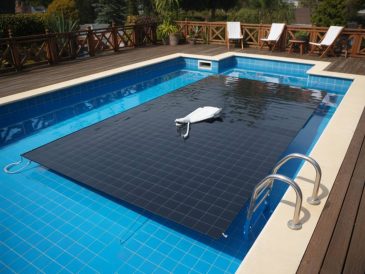
- Use a solar pool cover: A simple cover can dramatically reduce heat loss overnight. Think of it as a cozy duvet for your pool.
- Control the flow rate: Slower water through your collectors allows for better heat absorption. It’s less about speed, more about soaking in the sun.
- Maintain your panels: Keep them free from debris, algae, or bird gifts. A gentle wipe-down every few weeks can make a surprising difference.
- Monitor your temperatures: Digital controllers offer accuracy and peace of mind, letting you fine-tune your ideal swimming temperature.
In short? Think of your solar heating like a rose garden. It needs awareness and a touch of tending—but does it reward you? Effortlessly.
Financial and Environmental Benefits
Let’s talk numbers—because the sun might be free, but good installations come with an upfront cost. A typical solar pool heating system in the UK can range between £3,000 and £5,000. Yes, that’s a tidy sum. But consider this:
- No gas, no electricity costs for heating your pool.
- Minimal maintenance expenses—solar systems are famed for their longevity.
- Your pool season extends, your energy bill drops.
The return on investment typically lands within 3 to 5 years, depending on how often you swim and your energy rates. More importantly, the carbon savings are generous. Fewer emissions, more enjoyment. It’s a win-win steeped in sunshine.
Solar in the UK: Does It Really Work?
I can hear you asking: « But Harry, we live in Britain—clouds, drizzle, the famously unpredictable sky. Is this not a sun-soaked dream better left to the Med? »
An excellent question, and one I asked myself, coffee in hand, under a sky of tame grey. The answer is yes—solar works here, too. Even the UK, with its milder climate, receives sufficient solar radiation to support pool heating, especially from April through September.
The key lies in system sizing and supplementary tools. Combine solar with a thermal cover and size your collectors properly (about 50%-100% of your pool surface area), and you’ll be surprised at just how much heat nature can provide. Personally, I’ve regularly swum from early April into mid-October. Rain or shine, the system quietly hums in the background, gathering every ray it can.
Installation Insights and Choosing the Right System
Whether you’re about to build a luxury infinity pool, or looking to add solar to an existing setup, here are a few pointers to guide your journey:
- Speak to a certified installer: Avoid the temptation of a DIY install unless you’ve got plumbing and roofing experience. Quality matters.
- Check roof direction and load capacity: Ensure the chosen location can be reinforced if needed. Aesthetic balance matters too—no one wants a Frankenstein flattop.
- Prioritise durable materials: Look for UV-resistant, frost-proof collectors that suit UK weather fluctuations.
In my own experience, having a chat with a local solar expert was incredibly helpful. He walked around the garden with me, looking at sun patterns and roof angles with the same care one might show a bonsai. That moment, I knew—we were on the right path.
Design Harmony: Solar That Blends With Beauty
You’ve spent time curating your outdoor space—the lavender-lined pathways, the timber decking, perhaps a fire pit glowing amber in the twilight. So it’s understandable to hesitate at the thought of industrial-looking panels showing up uninvited.
But fear not. Today’s options are surprisingly sleek, and careful placement can make them virtually invisible. Roof-mounted systems on garages, pergolas, or even custom-built screens can hide the mechanics from sight, letting the starlight and summer parties remain the focus.
And remember—the truest luxury lies not just in opulence, but in balance. A pool gently warmed by the sun, surrounded by wildflowers and buzzing bees, is a harmony few things can rival.
A Final Word From the Garden Bench
As I write these closing lines, seated beside the soft murmur of warm water caressing tile, I can’t help but smile at the sun peeking out once more. The solar collectors are doing their quiet work; the pool, a few degrees warmer than yesterday. It feels like magic. But it’s not—it’s intention, nature, and a dash of technology.
If you’ve ever wondered how to warm your pool in a way that feels true to the land beneath your feet and the sky above your head, I hope this guide planted a few seeds.
The sun’s out. The water’s warm. Shall we dive in?