From manual chores to intelligent pools: what automation really changes
Smart pool automation is often presented as a futuristic add-on, a gadget for tech enthusiasts. In reality, it is reshaping the way owners maintain their pools, manage energy use, and design their outdoor living spaces. By connecting pumps, heaters, lights, sanitisation systems and even covers to a central brain, these solutions shift pool care from reactive to predictive, and from time-consuming to almost invisible.
This evolution is driven by several converging trends: rising energy costs, tighter environmental regulations, and a broader expectation that everything in the home should be controllable from a smartphone. For pool owners, the result is not only improved comfort, but also cleaner water, lower bills and longer equipment life.
What is smart pool automation in practical terms?
At its core, a smart pool system is a combination of:
- A central controller or hub (sometimes integrated into a variable-speed pump or a dedicated automation panel).
- Smart devices such as variable-speed pumps, automated valves, heaters, chlorinators, UV/ozone systems, and lighting.
- Sensors measuring temperature, water level, flow, and sometimes pH and ORP (oxidation-reduction potential) for sanitiser control.
- A user interface: usually a mobile app, web dashboard or wall-mounted touch panel.
These elements communicate via wired connections or wireless protocols, allowing the system to coordinate daily tasks: filtration cycles, heating schedules, sanitiser dosing, lighting scenes, spa operation and water features. Instead of adjusting multiple mechanical timers and switches, you define scenarios and rules. The system then executes them automatically and adapts to real-time conditions.
Automation and water quality: cleaner pools with fewer surprises
Water quality has always been the core challenge of pool ownership. Insufficient filtration, irregular chlorine levels and poor pH balance can quickly lead to cloudy water, algae blooms or irritated skin. Smart automation addresses this in several complementary ways.
First, filtration is optimised. Instead of running a single-speed pump at full power for a fixed number of hours, variable-speed pumps controlled by automation can:
- Run at low speed for longer periods, improving filtration effectiveness while consuming far less electricity.
- Increase speed automatically for tasks that require more flow, such as vacuuming, operating a spa, or feeding water features.
- Respond to schedules based on time-of-day electricity tariffs, running more intensive cycles when power is cheaper.
Second, dosing of sanitiser can be stabilised. Integrated chlorine generators (saltwater chlorinators) or liquid dosing systems can be managed by ORP and pH sensors. The system adds precisely what is needed when needed, instead of relying on large manual doses.
Among the advantages of automated chemistry management:
- More consistent chlorine levels, reducing peaks that cause strong odours or eye irritation.
- Less frequent “shocking” of the pool, which is often necessary in manually maintained pools.
- Reduced risk of corrosion or scaling caused by extreme pH or chlorine swings.
Finally, integrated alarms and remote alerts reduce the risk of problems going unnoticed. If a pump stops unexpectedly, if the water level drops, or if sanitizer levels fall out of range (when sensors are installed), the system can send a notification to the owner or even to a service company, enabling a fast response before the issue escalates.
Energy efficiency: where smart pools deliver measurable savings
Energy consumption has become a decisive factor in pool design and renovation. Pumps, heaters and lighting can significantly increase household energy bills if they are not carefully managed. Smart automation is one of the most effective ways to reduce this footprint.
The main savings come from:
- Variable-speed pumps and optimised run times
A properly configured variable-speed pump can reduce electricity consumption by 50–80% compared to an equivalent single-speed pump. Automation adjusts speed to the minimum required for filtration and increases it only when necessary. - Intelligent heating control
Whether the pool is heated by a heat pump, gas heater or solar system, automation can manage setpoints based on schedules and external conditions. This avoids needless heating when the pool will not be used for several days or during peak electricity pricing periods. - Lighting efficiency
LED pool and landscape lights are far more efficient than older halogen models. Automation ensures lights are turned off automatically at predefined times, or dimmed when only accent lighting is desired. - Covers and evaporation control
When integrated into an automated system, automatic safety or slatted covers can be closed whenever heating is off or during the night. Reducing evaporation is one of the most powerful levers for cutting heating demand.
For many pool owners, these optimisations shorten the payback period of a new pump, heater or automation panel. While figures vary depending on climate and equipment, it is common to see substantial decreases in annual operating costs, particularly when replacing older, oversized single-speed pumps.
Comfort and luxury: an outdoor space that reacts to you
Beyond maintenance and efficiency, smart pool automation is also about transforming the pool area into a responsive extension of the home. Owners often discover that features they rarely used in the past, such as water features or coloured lighting, become part of everyday life once they are a tap away on a phone.
Typical comfort-oriented functions include:
- Starting the spa and heating it to the perfect temperature before arriving home.
- Setting thematic lighting scenes for evening dining, parties or quiet relaxation.
- Coordinating landscape lighting, pool lights and water features into a single scene.
- Integrating music systems or outdoor audio controlled by the same app.
- Managing several zones (main pool, spa, children’s splash area, decorative ponds) from one interface.
For those who already have a smart home ecosystem, some pool controllers can be connected to voice assistants or integrated into broader home automation platforms. Commands like “start evening mode” can then simultaneously adjust indoor lighting, lower blinds, and activate pool lights and water features.
Key components and technologies behind smart pool systems
When evaluating smart pool solutions, it is helpful to understand the major components and how they interact. Most modern systems are modular, allowing owners to start small and expand later.
- Automation control panel or hub
This is the brain of the system. Often installed near existing pool equipment, it connects to relays, sensors and communication buses. Some brands integrate it directly into the pump or chlorinator, while others provide a separate enclosure. - Smart pumps
Variable-speed or variable-flow pumps with digital controls communicate with the hub. They can receive commands, report operating status, and sometimes provide detailed energy consumption data. - Heaters and heat pumps
Modern heaters often include communication ports allowing the automation system to set temperatures, manage priorities between pool and spa, and schedule operation. - Chemistry control systems
These systems combine pH and ORP probes with dosing pumps or salt chlorinators. When integrated into the central automation, the pool’s chemistry can be monitored and adjusted remotely. - Valves and actuators
Motorised valves direct water flow between pool and spa, water features or different filtration circuits. The automation hub rotates them as needed based on selected modes or schedules. - Lighting and effects
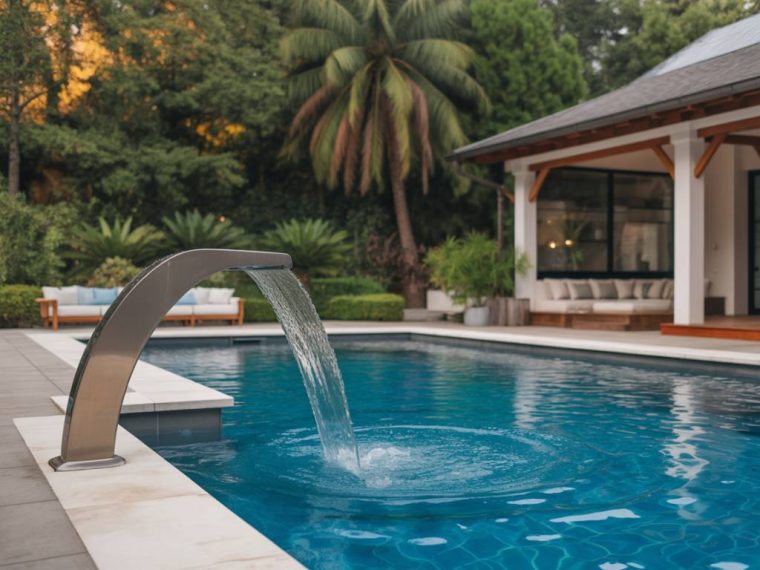
LED lights with colour-changing capabilities, fountains, bubblers and laminar jets are often wired into the automation system for synchronised control. - Sensors and safety features
Water-level sensors, temperature probes, flow switches and pressure sensors protect equipment and refine automation logic. In some regions, integration with alarms or safety covers is also possible.
Retrofitting vs. building new: what pool owners should consider
Smart automation can be installed on both new and existing pools, but the approach differs.
For new builds, most decisions can be made at the design stage:
- Choosing an automation-ready pump and heater from the outset.
- Planning conduit and wiring paths for sensors, lights and future upgrades.
- Integrating landscape lighting and audio into the same control ecosystem.
- Allowing physical space for an automation panel and easy access for service technicians.
Retrofitting an existing pool requires a more tailored assessment:
- Condition and age of current equipment: some older pumps or heaters may not be compatible and could need replacement.
- Existing electrical capacity and wiring: additional circuits or safety upgrades may be required.
- Owner priorities: some choose to begin with essential automation (pump and lights), then add chemistry control and spa automation later.
- Integration with current smart home systems: checking whether preferred platforms are supported.
In many cases, the most impactful first step is upgrading to a variable-speed pump controlled by a basic automation hub or smart timer. More advanced features can follow as needs and budget evolve.
Maintenance, remote monitoring and the role of professionals
Smart automation does not remove the need for physical maintenance, but it changes its nature. Certain tasks, like skimming leaves, brushing walls or backwashing filters (when not automated), still must be done on site. However, many service visits can be better planned or even replaced by remote diagnostics.
When authorised by the owner, some systems allow pool professionals to:
- Check equipment status and error messages remotely.
- Review temperature, run-time and chemical control history.
- Adjust schedules or setpoints without visiting the property.
- Receive alerts in parallel with the owner when a fault occurs.
This collaboration can increase reliability and reduce downtime. Instead of discovering a problem during a scheduled monthly visit, the technician can intervene when the first alerts appear. For rental properties or second homes, this can be a significant advantage, especially during peak season.
Trends shaping the next generation of smart pools
As with other connected devices, smart pool systems are evolving rapidly. Several trends are already visible and likely to accelerate.
- More advanced analytics, using historical data to recommend optimal schedules and predict equipment wear.
- Improved sensor accuracy and durability, especially for pH and ORP probes, which are traditionally sensitive components.
- Deeper integration with utility demand-response programmes, where pool systems adjust load in response to grid signals in exchange for financial incentives.
- Simplified user interfaces, focusing on scenarios and outcomes (“keep pool ready for use by 4 pm”) rather than technical parameters.
- Greater modularity, allowing owners to choose only the functions they need without committing to a single closed ecosystem.
For pool owners, the message is clear: automation is moving from optional luxury to central infrastructure. Whether the priority is reducing energy consumption, improving water quality, or simply spending more time enjoying the water and less time maintaining it, smart control systems are becoming a key part of the modern pool experience.