
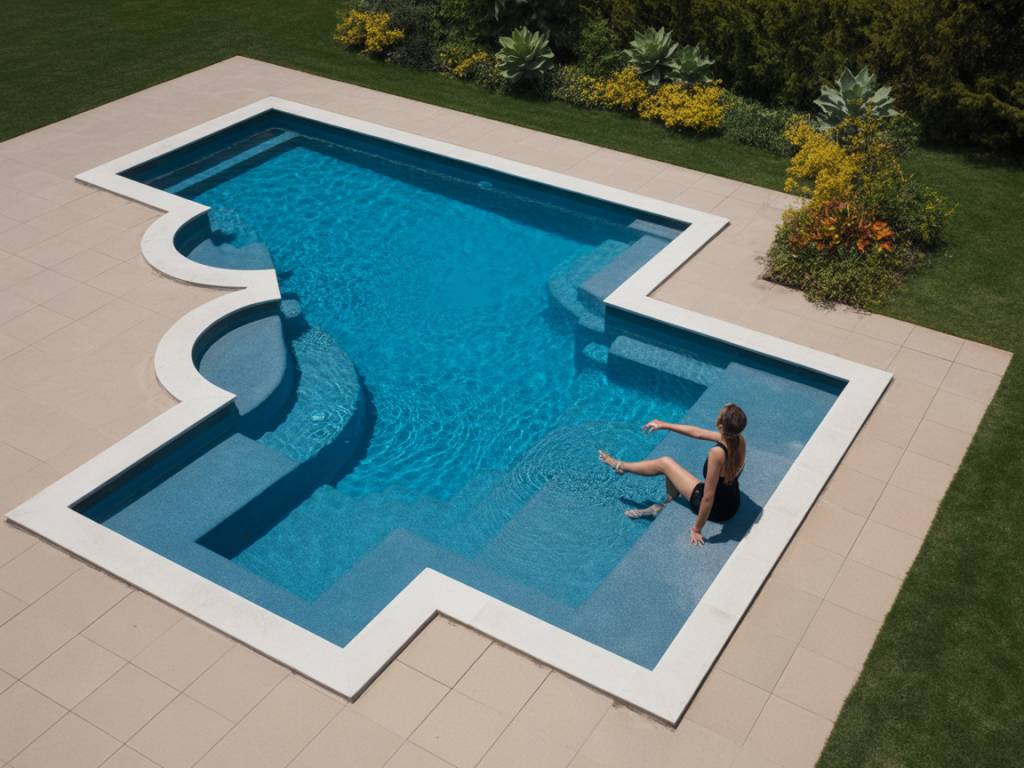
Sharp lines. Mirrored surfaces. The kind of pool that stops a garden party mid-conversation. Modern geometric pools have moved well beyond the standard rectangle — today’s designs are architectural statements, precision-engineered to complement the home, the landscape, and the way you actually live outdoors. Whether you’re working with a compact urban terrace or a sweeping rural plot, the right geometric shape transforms a swimming pool into the centrepiece your garden has always deserved.
Here are the most striking ideas for modern geometric pool shapes that wow — from refined classics to bold, multi-level showstoppers.
Ideas for Modern Geometric Pool Shapes That Wow: Where to Start
Choosing a geometric pool shape isn’t purely aesthetic — it’s about understanding how your outdoor space flows, how you’ll use the water, and what kind of visual impact you want to create. Geometric pools are defined by straight lines, right angles, and intentional symmetry. They’re inherently easier to cover, maintain, and integrate with paving and decking — which also makes them a smart long-term investment.
The key starting questions are simple: What is the dominant axis of your garden? Do you need lap space, leisure space, or both? And crucially — what architectural style does your home project? Let those answers guide the shape before anything else.
The Rectangle: The Benchmark of Modern Pool Design
The rectangular pool remains the gold standard for good reason. Its proportions are inherently balanced, it integrates with almost any landscape orientation, and it supports every kind of use — from early-morning laps to lazy afternoon floating.
But the rectangle has evolved. Today’s versions push the form further with:
- Elongated lap pools — ratios of 3:1 or 4:1 create a sleek, canal-like effect that emphasises garden depth.
- Overflow edges — a raised rim with a thin sheet cascade gives the illusion of an infinity pool without requiring a hillside setting.
- Sun shelves — a shallow platform (typically 30cm deep) built into one end, ideal for lounging, toddlers, or simply cooling your feet.
- Integrated decking — large-format porcelain or warm timber surrounds soften the geometry and frame the water beautifully.
A 12×4 metre rectangle in charcoal slate, for example, can command a modest suburban garden with the same quiet authority as a luxury hotel pool. The simplicity is the luxury.
L-Shaped Pools: Two Zones, One Elegant Silhouette
The L-shape is one of the most practical and visually compelling options for medium to large gardens. Its two distinct arms serve different functions — typically one for swimming laps, the other for social lounging — without a single visual compromise.
This shape is also a designer’s solution to awkward plots. Gardens with mature trees, irregular boundaries, or existing structures often benefit from an L-configuration that navigates obstacles gracefully rather than fighting them.
Popular enhancements for L-shaped pools include:
- Submerged seating or bar stools in the wider social arm
- A step-down spa integrated into the corner joint
- Contrasting tile work to visually distinguish the two zones
The result is a pool that genuinely earns its footprint — every square metre has a purpose.
T-Shaped Pools: Architectural Drama with Balance
For gardens designed around a central axis — think formal courtyards, symmetrical planting schemes, or homes with a strong central sightline — the T-shaped pool delivers striking architectural presence.
The « stem » typically runs perpendicular to the house, drawing the eye outward and elongating the perceived depth of the garden. The horizontal bar at the far end creates a natural gathering point, often aligned with a pergola, boundary wall, or planting bed.
T-shaped pools work exceptionally well in contemporary builds where clean lines and spatial proportion are part of the wider design language. Paired with limestone paving and low, clipped hedging, the effect is calm, composed, and utterly intentional.
Square Pools: Compact, Sculptural, and Surprisingly Versatile
Don’t underestimate the square. In smaller gardens — particularly urban plots where space is genuinely limited — a well-executed square pool functions as much as a reflective water feature as it does a swimming facility.
A 4×4 or 5×5 metre square pool framed by corten steel planters, vertical greenery, or polished concrete can feel more like a piece of contemporary sculpture than a backyard amenity. Add underwater LED lighting and the transformation after dark is remarkable.
Square pools are also perfectly proportioned for spa conversions — jets, bench seating, and heating can all be integrated without the shape feeling crowded. For households that entertain in the evenings, a heated square plunge pool becomes the social anchor of the entire outdoor space.
Split-Level Pools: Topography as a Design Feature
Sloped gardens are often treated as a problem to be solved. Split-level pools reframe them as an opportunity. By working with the natural gradient rather than against it, split-level designs introduce drama, dimension, and a sense of discovery that flat-site pools simply cannot replicate.
A typical configuration places a lap or main pool at the upper level, with a smaller plunge pool or spa below, connected by a cascading water feature. The sound and movement of falling water adds another sensory layer — and practically speaking, doubles as white noise to soften ambient garden sounds.
Key design considerations for split-level pools:
- Structural engineering is critical — retaining walls must be designed for water pressure and soil load simultaneously.
- Lighting the cascade from below creates a spectacular evening focal point.
- Each level can be finished differently — smooth render above, natural stone below — to reinforce the transition between zones.
Geometric Infinity Pools: The Edge of Elegance
The infinity pool is perhaps the most photographed pool style of the past decade — and for good reason. When executed well, the visual effect of water disappearing into sky or landscape is genuinely breathtaking.
What makes geometric infinity pools particularly powerful is the contrast between rigid, angular structure and the softness of the vanishing edge. A rectangle or square pool with one or two overflow edges channels water into a concealed balance tank, creating the illusion of a surface that has no boundary.
Infinity edges are most effective on sloped or elevated sites, but modern engineering means the effect can be achieved on relatively level ground too — particularly when the pool faces a view, a treeline, or an open sky. Pale coping stone, a restrained palette, and strategic planting all help the water take centre stage.
Finishing Details That Reinforce the Geometry
Once the shape is set, the right details either sharpen or soften the geometric impact. These choices matter more than most homeowners initially expect:
- Tile selection: Grid-format glass or ceramic tiles amplify angular lines. Mosaic waterline borders in a contrasting tone give optical definition and visual rhythm.
- Coping material: Continuous, uninterrupted coping — especially in large-format stone or porcelain — reinforces the clean perimeter and prevents the shape from feeling cluttered.
- Lighting: Linear LED strips recessed into steps, benches, or the pool wall echo the shape and create stunning reflections after dark.
- Water colour: Dark-tiled pools appear deeper and more dramatic; light interiors feel fresher and more Mediterranean. The liner or render colour fundamentally changes how the geometry reads.
Choosing Materials That Let the Shape Speak
Geometry is amplified by contrast. Smooth white render inside a square pool makes the edges razor-sharp. Large-format grey porcelain around a rectangular pool extends the horizontal lines across the surrounding terrace. Reclaimed stone soften the edges without disguising them.
For a monochrome, architecture-led look: charcoal, slate, and anthracite tones project confidence and modernity. For something warmer and more liveable: sandy limestone, pale travertine, or warm timber decking balance the precision of the shape with organic comfort.
The best geometric pools feel like they were always meant to be there — as if the garden grew around them, not the other way around. Getting that balance right is a matter of letting the shape, the material, and the planting work as one.
Bringing Your Geometric Pool Vision to Life
Every one of the ideas for modern geometric pool shapes that wow outlined here begins with the same foundation: understanding the space, the lifestyle, and the story you want the garden to tell. A lap pool for a fitness-driven household will have entirely different proportions and finishes to a social plunge pool built for entertaining.
At Terra Pool, we work across the full spectrum of geometric designs — from compact urban squares to dramatic hillside infinity pools — and every project starts with a conversation about how you want to feel when you step outside. Because the right shape doesn’t just look extraordinary. It changes how you live.