The Timeless Appeal of Natural Stone
There’s something inherently grounding about natural stone. Perhaps it’s the way it speaks of ancient time, of landscapes sculpted by wind and water, or perhaps it’s how it instantly roots a design in its surrounding environment. When it comes to poolside aesthetics, natural stone offers more than just visual grace — it brings texture, durability, and an unmistakable organic elegance that simply can’t be mimicked by synthetic materials.
In my own garden, nestled behind a hedgerow of hawthorn and hornbeam, I’ve laid flagstone pavers that lead to a modest plunge pool. The stones had lived a previous life as part of a farmhouse wall, and their weathered faces add a comforting sense of permanence beneath bare feet. That, to me, is the magic of stone — it remembers.
Choosing the Right Stone for Your Pool
Not all stones are created equal, particularly in the demanding environment of a poolside setting where slip-resistance, resistance to chlorine or saltwater, and heat retention all matter. Here’s a breakdown of some commonly used natural stones and how they perform:
- Sandstone: Warm and soft underfoot, sandstone has a rugged charm. However, it is porous and may require sealing if used close to water.
- Limestone: Elegant and cool-toned, limestone ages beautifully but can be sensitive to acidic cleaners or water chemistry imbalances.
- Travertine: A favourite for pool decks — naturally non-slip, heat-resistant, and forgiving underfoot. Its earthy tones blend seamlessly with most gardens.
- Slate: Rich in colour and texture, slate can offer a dramatic contrast, but it tends to be slippery when wet unless given a textured finish.
- Granite: For those seeking resilience, granite is practically indestructible. It’s more refined in appearance but can retain heat on hot days.
The key here is to balance function with aesthetics. Too smooth and you risk slipping; too rough and your toes might stage a protest. In my experience, travertine consistently finds that sweet middle ground.
Creating Seamless Transitions Between Pool and Garden
A well-designed pool doesn’t shout its presence — it hums in harmony with its surroundings. Natural stone is ideal for blurring the lines between pool and landscape, allowing you to stitch the pool into the fabric of your garden rather than merely laying it on top.
Consider extending the stone used for your pool coping outwards into pathways or terrace areas. This continuity in material creates an effortless visual flow. You might even wrap a stone path through a thicket of lavender or ornamental grasses, leading the eye — and the feet — down to shimmering water’s edge.
Last summer, I visited a client’s garden in the Cotswolds where pale Bath stone coping merged into a sprawling herb garden. On warm afternoons, thyme and oregano released their oils in the sun, scenting the air around the pool. It was divine — an immersive, sensory haven.
Stone Water Features That Elevate Atmosphere
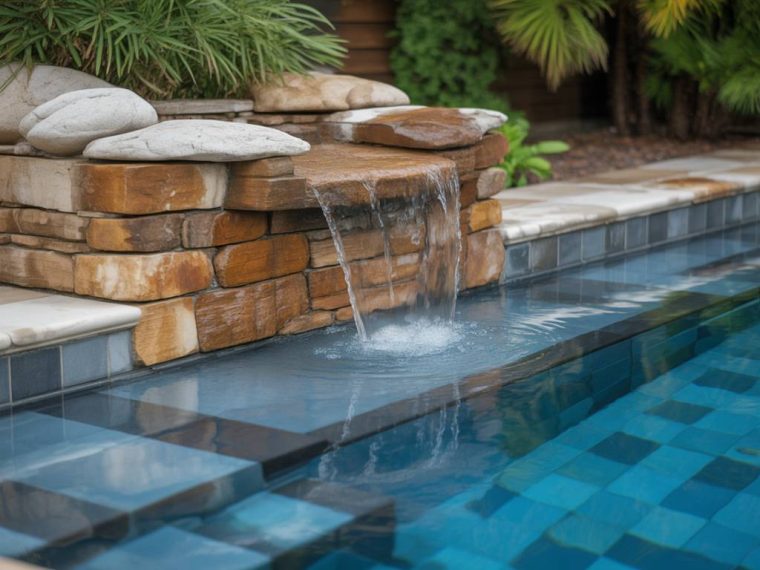
Introduce water to stone in movement, and something almost mythological awakens. A simple stone spillway can bring the gentle murmur of flowing water to your pool, lending sound and life to space that can otherwise verge on the static.
Here are a few ideas to consider:
- Stone scuppers: Position these spouts to let water cascade into the pool with a controlled trickle or bold splash, creating auditory richness.
- Stacked stone walls: Build a raised back wall behind the pool with a stone-faced waterfall – not just dramatic, but great for aeration too.
- Natural rock clusters: For a wilder look, use large boulders set strategically around the pool’s edge or in shallow ends to mimic the feel of a mountain spring.
Incorporating water over stone doesn’t require a grand gesture. A discreet channel carved through stone, allowing water to gurgle from an upper garden bed down into the pool, is sometimes more enchanting than a towering cascade.
Fire and Stone: An Inviting Contrast
There’s a primal appeal in marrying stone with fire. Flames dancing over a natural stone surface create an irresistible warmth that draws people together as daylight fades. Around pools, this combination can add a touch of evening drama and extend the usability of your space into cooler nights.
Think about integrating features like:
- Stone-built fire pits: Situate away from splashing zones, at the edge of the pool deck. Seat low along smooth stone benches with cushions for late-night swim chatter.
- Fire bowls over plinths: Set atop stacked stone pillars at the pool corners, they add sculptural poetry by day and a flickering allure by night.
I recall one balmy September evening, stretched out on a limestone bench with damp toes and a mug of cinnamon cider, as flames lazily leaned toward the stars. That moment still glows in my memory — mostly because of the way the firelight danced off the textured stone.
Building Durability Into Your Design
Beyond beauty, natural stone is practical. If you plan your installation with care, it can last generations. But like all things in nature — and in gardens — stone benefits from a degree of stewardship.
Keep these tips in mind:
- Use the right fixative: Set stone with mortar and backer to prevent shifting. For dry-laid paths, invest in a solid, compacted sub-base.
- Seal when necessary: Especially in freeze-thaw climates or saltwater systems, a breathable sealant can protect porous stones from weathering.
- Avoid harsh chemicals: Clean only with pH-neutral cleaners to avoid etching or discolouration.
- Design for drainage: Proper grading and water runoff channels will preserve the integrity of both stone and surrounding landscaping.
I once made the mistake, years ago, of placing bluestone steps flush to turf. A soggy winter taught me how complacency invites moss and slipperiness. Since then, a slight elevation and gravel trench beneath each step have kept things safer — and drier.
Stone in Sync with Sustainability
Pools often raise eyebrows from an environmental standpoint, but integrating natural stone can support a more mindful structure. Sourced responsibly and installed with a long lifespan in mind, it’s a low-impact material. Plus, its natural insulation can help regulate the temperature around the pool, reducing reliance on heating systems.
Reclaimed or local stone — whether sourced from nearby quarries or through architectural salvage — not only supports regional economies but adds layers of story to your pool’s design. A stone with past lives carries soul. It’s as though the earth’s memory becomes part of your space.
And stone inspires moderation — it resists trendiness. While tiled mosaics and glass finishes may rise and fall in fashion, the look of ancient stone quietly, confidently endures.
Infusing Charm with the Details
The beauty of stone lies in its imperfections. A small notch, a change in hue from fossil or mineral marking, a fine crack from age — these irregularities make each piece unique. Embrace that rustic variability in your coping edges or paving layout to craft a poolscape that feels artisan, not industrial.
You might consider:
- Rough-hewn edge coping: Leaves a tactile, natural finish — inviting to touch and easy on the eyes.
- Stone mosaics in shallow areas: Subtle patterns formed with pebbles or contrasting cuts can evoke riverbeds or abstract art.
- Fieldstone seating walls: Edging one side of the pool, these provide both a resting place and a frame to the water’s mirrored surface.
In the end, the magic lies in details. And stone, in all its forms, offers ample opportunity to compose these handsome, enduring notes.
A pool edged in stone isn’t just a place to swim. It’s a sun-drenched amphitheatre for summer laughter, a quiet early morning mirror, a fire-lit haven when the nights begin to cool. It’s architecture and nature intertwining — rough under hand, smooth under foot, deeply, unmistakably alive.