
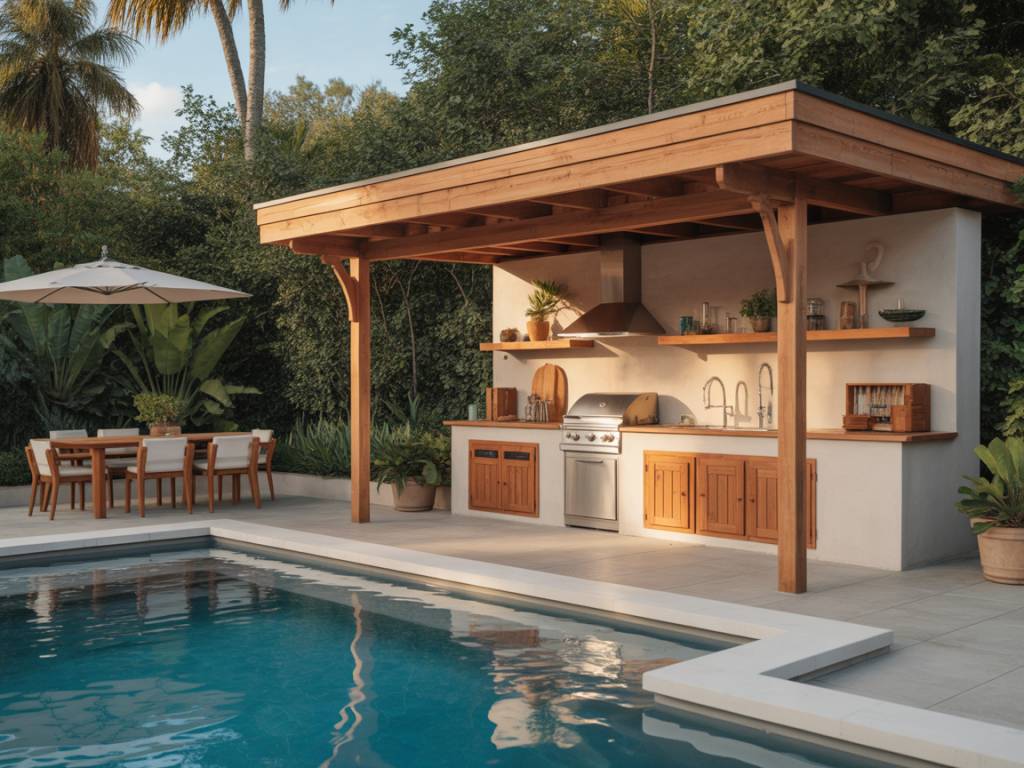
Why energy‑efficient poolside kitchens matter
For many homeowners, the pool area has evolved from a simple swimming zone into a fully equipped outdoor living space. The poolside kitchen sits at the center of this transformation, turning casual barbecues into complete alfresco dining experiences. Yet as this trend grows, so does the energy footprint: outdoor refrigerators run all summer, grills operate for hours, and accent lighting often stays on long after guests have gone home.
Designing an energy‑efficient poolside kitchen is less about sacrifice and more about strategy. Smart planning can significantly cut electricity and gas consumption while still delivering the comfort and convenience people expect in a premium outdoor space. From appliance selection to materials, layout, and lighting, each decision influences both running costs and environmental impact.
Planning the layout for passive efficiency
The most sustainable poolside kitchens start on the drawing board. A well‑considered layout uses the site’s natural advantages to reduce the need for artificial cooling, lighting, and even cleaning.
A few key principles guide efficient planning:
- Leverage natural shade: Position the kitchen where nearby buildings, trees, or pergolas can shield it from intense midday sun. Less direct solar gain means refrigerators and icemakers work less to maintain temperature.
- Optimize prevailing breezes: In many climates, orienting the cooking area to capture natural breezes helps disperse heat from grills and cooktops, reducing the temptation to add energy‑hungry fans or misters.
- Separate hot and cold zones: Locating grills and pizza ovens away from refrigerators and beverage centers keeps cooling appliances from fighting against radiant heat. Even a small offset or insulated partition can help.
- Keep it compact but functional: A “working triangle” similar to indoor kitchens—linking cook, prep, and refrigeration zones—reduces unnecessary walking, allows for shorter utility runs, and encourages smaller, more efficient equipment.
In practice, this means thinking about how guests will move between the pool, dining area, and kitchen. Efficient spaces are not just about energy; they also minimize wasted motion and encourage easy cleanup, which indirectly lowers water and electricity use.
Choosing energy‑efficient outdoor appliances
Appliances are often the single largest source of energy consumption in any poolside kitchen. Choosing outdoor‑rated, efficient models can substantially reduce operating costs over the life of the space.
- Refrigeration: Look for outdoor refrigerators and beverage centers with high‑performance insulation, efficient compressors, and, where available, Energy Star–style ratings or manufacturer data on annual kWh consumption. Glass doors showcase drinks attractively but typically lose more cold air than solid, insulated doors.
- Grills and cooking appliances: Gas and high‑efficiency infrared grills generally heat faster and waste less energy than older, open‑flame designs. Infrared burners deliver intense, directed heat, reducing preheat times and fuel use. Side burners with precise control can prevent oversizing the main grill for small tasks.
- Induction cooktops: For homeowners open to electric cooking, outdoor‑rated induction modules offer rapid heating with minimal standby loss, because they heat cookware directly rather than the surrounding air.
- Ice makers and coolers: Dedicated ice machines can be energy‑intensive. In low‑to‑moderate use scenarios, high‑performance coolers or drawer‑style ice storage paired with efficient ice production indoors may use less energy overall.
- Dishwashers and sinks: When a dishwasher is part of the design, choose compact, outdoor‑rated models with low water consumption and eco‑wash cycles. Where possible, limit the number of fixed sinks to reduce hot water demand and plumbing complexity.
One practical approach is to list which appliances will genuinely be used weekly, and which are occasional luxuries. Right‑sizing the outdoor kitchen—rather than replicating every function of the indoor one—can be one of the most effective energy‑saving strategies.
Harnessing solar and smart power management
Because poolside kitchens are typically used in fair weather and during daylight hours, they are well‑suited to solar power integration. Even modest photovoltaic systems can offset the energy required to run refrigerators, lighting, and small appliances.
- Roof‑mounted solar panels: Pergolas, shade structures, and nearby outbuildings provide natural mounting opportunities. Integrated solar roofs can double as shading devices for the kitchen and dining area.
- Dedicated circuits for outdoor zones: Running separate circuits to the pool and kitchen areas allows for targeted monitoring and, in some cases, the use of smart panels or sub‑meters to track outdoor energy use only.
- Smart outlets and switches: Plug‑in smart outlets can schedule beverage fridges or accent lighting to power down automatically overnight. Motion sensors around prep zones ensure work lights only run when needed.
- Battery storage: In regions with high solar yields, compact battery systems can store daytime energy to power evening gatherings. While still an investment, this can be compelling for homes already using solar for pool pumps or household loads.
Combining solar with efficient appliances and lighting can dramatically reduce the grid draw of an active outdoor space, especially in climates where pool and kitchen use are seasonal rather than year‑round.
Efficient lighting for ambiance and safety
Lighting does more than illuminate; it shapes the character of the poolside kitchen after sunset. The challenge is to achieve atmosphere and safety without unnecessary energy use or light pollution.
- LED as the default choice: High‑quality LED fixtures consume a fraction of the power of halogen or incandescent options and produce far less waste heat—useful in already warm climates.
- Layered lighting: Separate circuits for task lighting (over grills and prep areas), ambient lighting (under‑counter strips, wall sconces), and decorative features (tree uplights, pool glow) let homeowners activate only what they need.
- Smart controls and dimmers: Dimmers allow lights to run at lower output, reducing power consumption and extending fixture life. Simple scenes—such as “cooking,” “dining,” and “late night”—make it easy to match lighting to the moment.
- Targeted, shielded fixtures: Downlights and well‑shielded wall lights direct illumination where it’s needed while reducing glare around the pool, which improves safety and preserves the night sky.
For readers investing in new installations, it is worth selecting luminaires with robust outdoor ratings and corrosion‑resistant finishes. Durable, efficient fixtures reduce both replacement costs and the environmental impact of frequent upgrades.
Materials and finishes that support sustainability
Energy efficiency is closely tied to durability. A poolside kitchen that withstands weather, humidity, and chemical exposure with minimal maintenance will demand fewer resources over time.
- Cabinetry and structure: Marine‑grade stainless steel, powder‑coated aluminum, and high‑pressure laminates often offer the best balance between weather resistance and longevity. They may have a higher upfront cost but can avoid premature replacement.
- Countertops: Dense, light‑colored surfaces such as certain granites, porcelains, or engineered stones reflect more sunlight than dark options, keeping work areas cooler and reducing radiant heat near refrigeration.
- Flooring: Slip‑resistant porcelain pavers, textured concrete, and some composite materials can be locally sourced and require little ongoing maintenance, which indirectly saves energy and water used in cleaning.
- Shading elements: Pergolas with adjustable louvers or sustainable timber structures provide passive temperature control. When combined with climbing plants, they can offer natural insulation and a softer visual transition between the kitchen and landscape.
Where feasible, sourcing materials from local or regional suppliers reduces transportation emissions and can simplify future repairs. Many manufacturers now highlight life‑cycle data, recycled content, and environmental certifications, which can guide more informed choices.
Water management and efficient cleanup
Energy efficiency and water stewardship go hand in hand in a pool setting. The way a poolside kitchen handles cleaning, drainage, and food prep can influence both resource use and long‑term sustainability.
- Low‑flow fixtures: Outdoor sinks fitted with aerators and low‑flow taps maintain practical water pressure while cutting consumption during rinsing and handwashing.
- Zoned cleaning strategy: Consolidating cleanup to a single primary sink or dishwasher minimizes hot water runs and allows the use of shorter, better‑insulated plumbing lines.
- Drainage planning: Designing graded surfaces and channel drains ensures that spills and rinse water move away from the pool, reducing contamination and the need for extra chemical treatments.
- Waste separation: Built‑in stations for recycling and organic waste encourage better sorting and can support composting, especially when paired with covered bins that deter pests.
Efficient cleanup routines—such as wiping surfaces promptly and covering appliances when not in use—also help extend the life of equipment, reducing the energy and materials needed for replacements.
Integrating the pool and kitchen as one system
A sustainable outdoor living area works best when the pool and kitchen are designed as parts of a single ecosystem. Shared infrastructure can cut redundancy and optimize performance.
- Unified electrical planning: Coordinating power needs for pumps, heaters, lights, and kitchen appliances allows for correctly sized panels and reduces the risk of overspecifying equipment.
- Shared shading and structures: A pergola or pavilion can shade both the pool’s shallow lounging areas and the kitchen, reducing heat buildup in water and underfoot surfaces.
- Centralized control systems: Modern automation platforms can manage pool heating, filtration schedules, and outdoor kitchen lighting from a single interface. This encourages better oversight of total energy use.
- Consistent material palette: Using similar finishes and colors around the pool and kitchen creates visual cohesion and can simplify maintenance, as cleaners and sealers are selected for fewer surface types.
Thinking of the pool and kitchen as one project, rather than two separate additions, helps homeowners avoid duplicated infrastructure, oversizing, and incompatible technologies.
Balancing comfort, aesthetics, and performance
Energy‑efficient poolside kitchens are ultimately about balance. While technical specifications, R‑values, and kWh ratings matter, the space must also feel inviting and intuitive to use. The most successful projects blend practical decision‑making—selecting efficient appliances, materials, and controls—with an honest assessment of how often and in what ways the kitchen will be used.
For readers considering upgrades or new construction, starting with a clear usage profile, then layering in passive design strategies, efficient equipment, and thoughtful lighting, can lead to outdoor kitchens that enhance daily life while limiting their environmental and financial costs. In a landscape where pools and outdoor rooms are increasingly seen as long‑term investments rather than seasonal luxuries, designing with energy efficiency in mind is quickly becoming the new standard for sustainable outdoor living.