
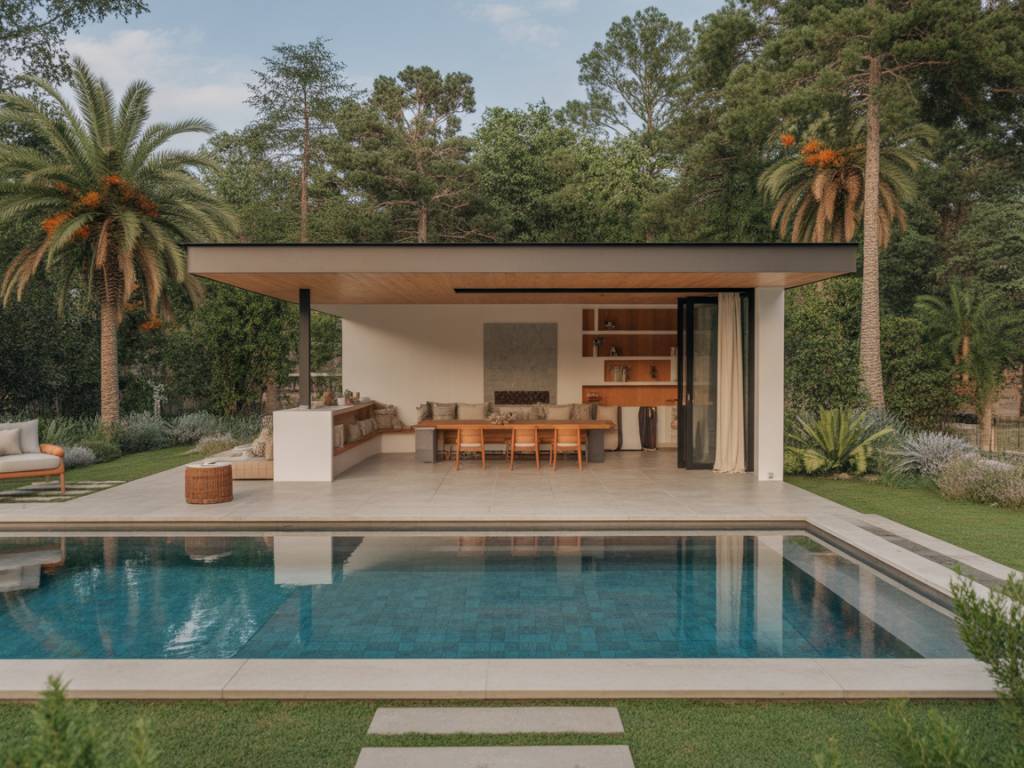
Rethinking the modern pool house
A pool house is no longer just a small shed to store inflatables and chemicals. In many contemporary homes, it is evolving into a multifunctional pavilion: a space that extends the living area outdoors, supports wellness routines, and showcases sustainable design choices. When carefully planned, a pool house can become a hybrid zone where entertaining, relaxation, and practical functions coexist in a compact footprint.
Designing such a space requires more than picking finishes and choosing furniture. It involves thinking about how your household lives around the pool, how the building interacts with the landscape, and how materials, equipment, and technology can quietly support comfort while minimizing environmental impact. The goal is to create a building that feels like a natural extension of your home, yet has its own identity.
Clarifying the role of a multifunctional pool house
Before selecting materials or sketching plans, it helps to list the roles your pool house should fulfill. A “multifunctional” structure can mean very different things depending on lifestyle and climate. Some owners want a simple garden pavilion for shade and storage, while others aim for a mini spa, guest suite, or even a home office by the water.
Common functions include:
- Changing and showering: A dedicated changing area with hooks, benches, and a compact bathroom helps keep wet footprints out of the main house.
- Entertaining: A shaded seating zone, a bar or kitchenette, and space for a dining table can turn the pool house into the center of summer gatherings.
- Wellness and relaxation: Zones for yoga mats, a small gym, a sauna, or a hot tub corner can transform the space into a year-round wellness retreat.
- Storage and technical equipment: Thoughtful cabinetry for towels, toys, and cleaning tools, plus discreet housing for filtration, pumps, and pool automation systems.
- Guest accommodation: A flexible room with a sofa bed or murphy bed can double as a quiet retreat and occasional guest suite.
- Work and creativity: A desk nook, good lighting, and a proper Wi-Fi setup can turn part of the pool house into an office or studio with a view of the water.
Mapping these functions at the outset guides the floor plan and helps prevent the structure from becoming merely a storage shed with an oversized terrace.
Balancing indoor comfort and outdoor living
The essence of a pool house lies in its ability to bridge indoor and outdoor spaces. The key is flexibility: the building should open generously to the pool on warm days, yet close down efficiently when weather or season changes.
Architecturally, large openings are crucial. Sliding, folding, or pivot doors allow the main room to connect directly with the pool deck. In milder climates, a covered terrace or veranda attached to the pool house becomes a semi-outdoor living room, protected from sun and light rain but still immersed in the garden. In hotter regions, deep overhangs, pergolas with adjustable louvers, or shade sails can help manage solar gain.
Inside, the boundary between indoor and outdoor is further blurred by materials. Non-slip porcelain tiles, composite decking, or treated concrete floors can extend from the interior to the terrace, creating visual continuity and safer footing for wet feet. Furniture with outdoor-grade fabrics can move between inside and outside as needed.
It is also worth considering seasonality. If you plan to use the space in cooler months, insulated walls, efficient glazing, and a compact heating system (such as a heat pump or underfloor heating) are important. For mid-season comfort, simple strategies like ceiling fans, operable windows for cross-ventilation, and insulated roof panels can make a noticeable difference.
Planning the layout: zoning for multiple uses
A multifunctional pool house functions best when each activity zone feels intentional, even in a relatively small footprint. Rather than one open box, many successful designs layer spaces from “wet” to “dry” and from “public” to “private.”
A common approach:
- Pool-facing social zone: A lounge area with sofas, low tables, and possibly a bar counter or island should be the most open part, framing views of the pool.
- Service core: Centrally located bathrooms, showers, and storage minimize the distance from pool to changing area while keeping plumbing compact.
- Quiet retreat: A smaller, more enclosed room at the rear can serve as a guest room, office, or reading nook, slightly removed from the bustle.
- Technical and storage rooms: Separate, ventilated cavities for pool equipment, cleaning supplies, and outdoor gear preserve the clean, resort-like feel of the main space.
Sliding panels, curtains, and pocket doors can help reconfigure the interior as needs change. For example, a home office during the week can convert to an extra sleeping area when friends visit. Folding or nesting furniture, wall-mounted desks, and modular shelving all support this flexibility.
Integrating sustainability from the ground up
A pool house inevitably consumes resources: materials to build it, energy to heat and cool it, and sometimes water for showers or a small kitchen. Building sustainability into the design helps reduce operational costs and environmental impact while often improving comfort.
Fundamental strategies include:
- Passive solar design: Position the building to maximize winter sun and minimize direct summer heat. Roof overhangs, exterior blinds, and brise-soleil structures can control solar gain.
- Natural ventilation: Align windows and openings to encourage cross-breezes. High-level vents or operable skylights help release hot air in summer.
- Efficient envelope: Insulated walls, roofs, and floors paired with quality double or triple glazing reduce the need for mechanical heating and cooling.
- Responsible materials: Favor durable, low-maintenance products such as FSC-certified wood, recycled aluminum profiles, and high-quality composite cladding designed for poolside environments.
- Smart lighting: LED fixtures with motion sensors or daylight sensors reduce energy use without sacrificing ambiance.
Where possible, integrating renewable energy systems can further enhance sustainability. A roof oriented toward the sun is an ideal surface for photovoltaic panels that can power lighting, pool pumps, and even heat pumps for water heating. In some configurations, a battery system and energy monitoring tools allow you to track and optimize consumption across the season.
Water management and eco-conscious features
Water is central to the pool experience, so managing it thoughtfully is essential. Even small measures can make a difference over the life of the pool house.
Rainwater harvesting systems integrated into the pool house roof can collect water for garden irrigation, rinsing pool decks, or supplying an outdoor shower (when properly filtered). Overflow channels and grading around the building should be designed to direct runoff away from foundations and back into the landscape, reducing erosion.
Inside, low-flow fixtures for showers and taps help reduce consumption without undermining comfort. If your region allows, gray water from sinks and showers can sometimes be treated and reused for irrigation, a solution that should be planned with local regulations and professional guidance in mind.
On the pool side, automatic covers, energy-efficient filtration pumps, and variable-speed circulation systems are worth considering. Many manufacturers now offer connected pool management systems that adjust filtration cycles and chemical dosing based on real-time data, often reducing both energy use and chemical consumption.
Choosing durable, low-maintenance materials
Pool houses live in demanding conditions: exposure to UV rays, splashes of chlorinated or salt water, and frequent temperature variations. Material selection has a direct impact on both the aesthetics and the maintenance workload.
For floors, non-slip porcelain tiles rated for outdoor use, textured natural stone, or sealed concrete provide robust surfaces. Around the pool and on terraces, composite decking boards are popular because they resist warping, splintering, and fading better than many untreated woods, while still offering a warm appearance.
For walls and cladding, fiber-cement panels, treated timber, masonry, or composite siding products can all perform well, provided they’re compatible with the local climate. Inside, moisture-resistant wall finishes and ventilation systems reduce the risk of mold, especially near showers and changing areas.
Fittings and hardware should be corrosion-resistant. Stainless steel rated for marine environments, powder-coated aluminum, and high-quality outdoor-grade hinges and handles will better tolerate humidity and splashes, reducing replacement cycles. When selecting cabinetry for kitchenettes or storage, look for products specifically designed for outdoor or semi-outdoor use with waterproof carcasses and UV-resistant door finishes.
Comfort, technology, and the luxury factor
Luxury in a pool house often comes less from opulence and more from a sense of ease: everything works seamlessly, comfort feels effortless, and the atmosphere invites lingering. Technology can support this without overwhelming the space.
Discreet audio systems, Wi-Fi access points, and integrated lighting controls allow you to set scenes for daytime swimming, evening dining, or a late-night dip. LED strips under benches or steps, wall-washers on landscaped areas, and dimmable ceiling fixtures can be managed through smart switches or a home automation platform.
Heating and cooling solutions tailored to the compact space also feel like a luxury. Reversible heat pumps, ductless mini-split systems, or radiant floor heating ensure year-round usability in many climates. Heated towel rails, under-bench storage with ventilation for drying, and well-planned hooks and racks elevate everyday routines.
For those seeking a spa-like environment, integrating a sauna cabin, steam shower, or compact whirlpool adds a distinct wellness dimension. Many brands offer modular sauna units, prefabricated steam generators, and plug-and-play spa pools that can be incorporated into the pool house design, provided there is sufficient ventilation, drainage, and electrical capacity.
Furniture, lighting, and the art of atmosphere
The character of a pool house is largely defined by its furnishings and lighting. These elements should withstand moisture and sun while expressing a clear design language that complements the main home.
Outdoor sofas, loungers, and dining sets with quick-dry cushions and UV-resistant fabrics are particularly suitable for convertible indoor-outdoor zones. Modular seating can be rearranged for parties, quiet afternoons, or even movie nights by the pool if you integrate a projector or outdoor TV.
Lighting deserves specific attention. Layered illumination—ambient, task, and accent—allows for different uses. For example:
- Ambient: Ceiling-mounted fixtures or recessed downlights for general visibility.
- Task: Focused lighting over counters, vanities, or the bar area.
- Accent: LED strips on steps, spotlights on plants, or uplights on feature walls to enhance the evening mood.
Selecting fixtures rated for damp or wet locations, especially near the pool and in showers, ensures safety and longevity. Many lighting manufacturers now offer coordinated indoor-outdoor collections, simplifying the creation of a cohesive look.
Practical considerations: storage, maintenance, and safety
Behind the scenes, a truly functional pool house depends on storage and safety planning. Ample, well-organized storage prevents clutter from encroaching on the relaxing atmosphere. Built-in cabinets for towels, swimwear, and maintenance tools keep daily essentials accessible but out of sight.
For pool chemicals and cleaning equipment, a dedicated, ventilated storage area is advisable, ideally with lockable doors and shelving designed to separate incompatible products. This not only protects users but also prolongs the life of nearby materials and equipment.
From a safety perspective, ensure that the circulation between house, pool, and pool house is well lit and slip-resistant. If there are children using the pool, consider how doors and gates close and lock, and how visibility from the main house to the pool is maintained. Many owners add smart cameras, door contacts, or water-level alarms as part of an integrated safety system, discretely built into the overall design.
Finally, plan access for maintenance professionals. Service technicians should be able to reach filtration systems, heat pumps, and electrical panels without disturbing the main living areas or crossing muddy garden patches. Simple measures such as a side path, adequate working clearances, and labeled valves and switches make seasonal maintenance smoother and less intrusive.
A multifunctional pool house that thoughtfully blends outdoor living, sustainability, and luxury becomes more than an accessory building. It acts as a daily interface between home, garden, and water, encouraging you to slow down, entertain, and enjoy the changing seasons in a space tailored to your habits and values. By combining smart planning, durable products, and a clear vision of how you want to live by the pool, the pool house can evolve from a simple outbuilding into a genuine living pavilion at the heart of your property.