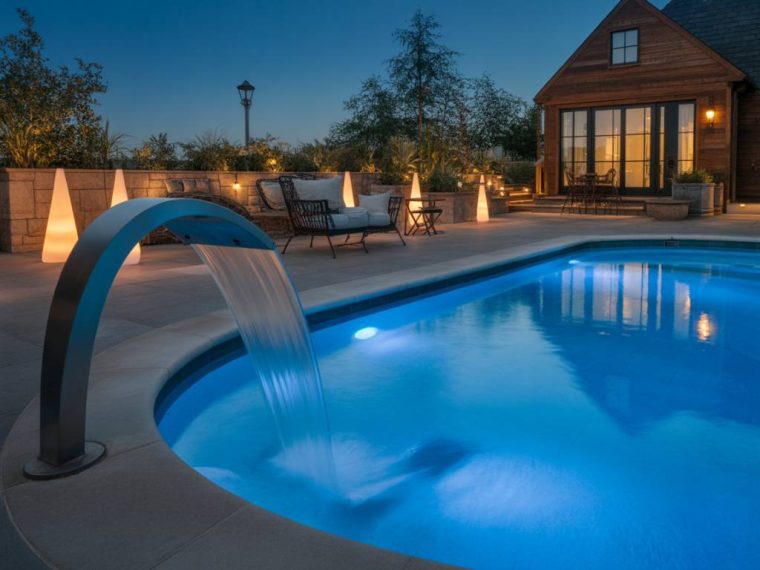
The Magic of Light: Why Pool Lighting Deserves More Than a Last-Minute Thought
On a quiet summer evening, when the dusk folds gently into twilight and the garden edges melt into shadow, the right lighting can transform your pool from a mere fixture into a stage. This isn’t just about visibility—it’s about atmosphere, mood, and a sense of place. You don’t just see your pool; you experience it.
As someone who has spent years shaping green spaces and stitching water into landscapes, I can tell you that pool lighting plays a far greater role than most realise. Get it right, and your outdoor space sings, even at midnight. Get it wrong—or worse, overlook it entirely—and it’s like forgetting to add salt to a gourmet meal. The form may be there, but the flavour is missing.
So, let’s take a closer stroll through the world of pool lighting—from technical tips to those small secrets that only reveal themselves under the glow of a well-set bulb.
Types of Pool Lighting: Function Meets Elegance
Before discussing design philosophies and light placement, it’s good to get familiar with the kinds of lighting available. Each type serves a unique role, and often, a beautiful result comes from blending several together.
- LED Lights: Energy-efficient and available in a range of colours, these are a go-to choice for modern poolscapes. They allow you to create different moods using colour transitions—cool blues for a serene evening or playful purples for garden parties.
- Halogen Lights: Though less energy-efficient, they produce a warm, inviting glow beloved by those who crave firelight warmth. They’re slowly being phased out due to energy concerns but still have their charm.
- Fiber Optic Lighting: Ideal for starry effects along waterlines or steps. The light source remains outside the water, with the cable transmitting illumination within. A tad more complex to install, but oh, the effect… like galaxies beneath your feet.
- Solar Pool Lights: Wonderful for sustainability-minded folks. These lights charge during the day and glow through the night—best used for accent lighting around the pool rather than for swimming visibility.
Layering Light: Creating Dimension and Drama
Now that you have your palette, it’s time to paint. Much like in interior design, the secret to impactful pool lighting lies in layering. Start with the essentials—submerged lights to guide swimmers safely, path lights to line the way. Then add drama: uplighting trees or architectural backdrops, highlighting a water feature, or placing ambient lighting beneath deck edges.
Think of it not just in terms of how your pool looks, but how it feels. Is it a warm hug on a summer night or a chic space for entertaining friends with fizz and laughter? Let the lighting follow those emotions.
Highlighting the Hero Features
Every garden and pool has its champion. Perhaps it’s a cobalt-tiled infinity edge dissolving into the valley below. Perhaps it’s an old olive tree leaning just close enough to the pool’s edge to dip its leaves into the blue. Use lighting to amplify these focal points.
I remember a project I worked on a few years ago—a narrow lap pool flanked by corten steel walls and a cascade that gently purled over smooth quartzite. At night, we lit the falling water from below using warm LED strips, and the surface shimmered like mercury in moonlight. The magic wasn’t accidental; it was earned through experimentation and attention to detail.
Safety First, But Make It Beautiful
Walkways, steps, and boundaries need clear definition after dark, both for aesthetic reasons and practical ones. But safety lighting doesn’t have to resemble a carpark. Soft bollard lights or recessed deck lamps can guide the path with subtle poise.
Consider using indirect lighting along walls or low hedging. This avoids glare while maintaining clarity. Underwater LEDs around stairs or shallow ends not only look enchanting but also help swimmers of all ages stay oriented.
And don’t forget your pool cover mechanism. If it’s not visible at night, someone unfamiliar might accidentally step onto an uncovered section. A discrete light positioned above or beside the cover’s housing can solve that neatly.
The Dance Between Light and Water
Unlike stone, wood, or grass, water moves. It glimmers. It refracts. And light, when paired with this reflective dance partner, becomes a performer itself. Avoid flooding your pool with flat white brightness. Instead, aim to draw shadows and highlights, to catch motion rather than flatten it.
LED colour changing systems can be timed with fountains or waterfalls for synchronised displays—though some of us prefer simpler joys: a flickering candle buoyed in a floating lantern or a storm lantern on a terraced wall casting golden ripples across the surface.
Where natural elements like wind, moonlight, and rustling trees join in, the lighting should feel part of the orchestra, not an unexpected solo.
Lighting Placement Tips from the Garden Path
Over the years, I’ve jotted down a handful of mantras when placing outdoor lights—especially around pools. Here are some that may illuminate your own decisions:
- Angle down, not across: Don’t blind your guests. Use shields or lantern-style diffusers to guide light downward instead of sideways.
- Hide your sources: The light should appear as though it’s emanating naturally—tucked under coping stones, nestled in a shrub, or diffused behind a sculpture. Mystery enhances mood.
- Layer, scatter, and repeat: Avoid clustering multiple lights in one corner and leaving the rest of the space dark. Instead, like stars across a sky, space your lighting to build rhythm and balance.
- Test it at twilight: Install your lights and then step back at sunset. You’ll learn more in 15 minutes of natural dusk than in hours of daytime planning.
Sustainability in Mind
As tempting as it may be to go all out, remember that lighting requires power. Choosing solar where possible, investing in high-efficiency LED fixtures, and using smart timers or motion sensors can help reduce environmental impact.
Even subtle shifts help. For instance, dimmable lights that automatically reduce brightness past midnight are both practical and considerate to your household (and the local owl population).
Curating the Experience: What Do You Want to Feel?
Ultimately, pool lighting isn’t about brightness or luxury—it’s about atmosphere. Ask yourself this: If your pool were a scene in a novel, what mood would you want to set? Tranquil retreat? Mediterranean soirée? Early morning contemplation?
I often tell friends: “The way your pool looks at night should make you want to wrap yourself in a blanket and step outside just for a moment longer.” When light warms stone, silhouettes trees, and flickers quietly on water—it invites you out, even if just in slippers with a cup of tea.
Pool lighting isn’t the final touch; it’s a signature. A whisper of personality against the backdrop of your landscape. Choose thoughtfully, install carefully, and with every reflection that dances across your surface, you’ll be thankful you gave it the attention it deserves.