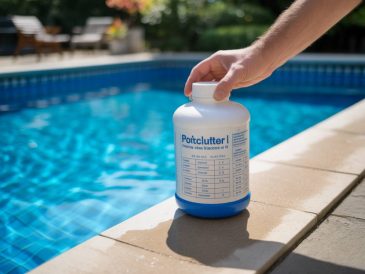
Your toes brush the sun-warmed stone as you wander barefoot around the edge of your pool. The surface is glassy, reflecting the sky like a painter’s canvas. It’s a perfect day. But beneath this serene surface lies a delicate puzzle that every pool lover must solve: the balance of chlorine.
It might not sound poetic, but trust me — when you strike the perfect chemical harmony, your swimming pool rewards you with crystal clarity, silky water, and that unmistakable, refreshing scent that spells summer. Get it wrong, and suddenly your personal paradise becomes a murky, eye-stinging battleground.
This is where the humble, often-overlooked chlorine calculator becomes a quiet hero. Let’s take a slow walk through what it is, why you need it, and how to wield it like a pro gardener with a newly sharpened spade.
What Is a Chlorine Calculator and Why Does It Matter?
Think of a chlorine calculator as your digital groundskeeper — neat, precise, and always on your side. It helps you determine exactly how much chlorine to add to your swimming pool to achieve the ideal balance, typically between 1 and 3 parts per million (ppm). Too little, and the water becomes a playground for unwanted guests like algae and bacteria. Too much, and swimmers emerge feeling like they’ve accidentally stepped into a laboratory.
Without proper chlorine levels, even the most beautifully designed pool can fall victim to murkiness. I’ve seen it myself — one summer, I got a bit lazy (we all do). A heatwave hit, the pool was in constant use, and I eyeballed the chlorine rather than calculating. Within days, the water turned a hazy green, like a pond in February. Trust me, it’s a mistake you only make once.
How Does a Chlorine Calculator Work?
It’s simple, really — the calculator takes into account:
- The volume of your pool (in litres or gallons)
- Your current chlorine level (which you can determine with a test strip or digital tester)
- Your target chlorine level
- The strength/concentration of the chlorine product you’re using
Once you input these values, the calculator does the math for you, providing the exact amount of chlorine needed to add — whether in tablet, granular, or liquid form. No more guessing games or overzealous scoops.
Calculating Pool Volume: The Foundation of Good Chemistry
Before you can compute chlorine needs, you have to know your pool’s volume. Most of us think we know — after all, we designed the thing or inherited it from someone who did — but let’s double check. Here’s a quick guideline:
- Rectangular Pool: Length × Width × Average Depth × 1,000 (for litres)
- Round Pool: Diameter × Diameter × Average Depth × 785 (for litres)
- Freeform/Custom Shapes: Break it into sections and calculate separately, then add them up
When I designed my first plunge pool, tucked between laurel hedges and a low stone wall, I underestimated the depth variation. The result? An inaccurate chlorine dose that taught me the value of precision. Measure, estimate again, and if needed, measure a third time.
Monitoring Current Chlorine Levels
Ever used a test strip and hesitated, squinting to decide if the purple was more lilac or eggplant? You’re not alone. While test strips are user-friendly and affordable, they can be prone to interpretation. Digital testers, though more expensive, provide accurate readings within seconds and are a reliable ally in maintaining your pool’s vital stats.
A general rule: test your pool at least twice a week during high-use months, or more frequently after heavy rains, intense sunshine, or a weekend pool party. If your kids just threw an inflatable flamingo fiesta, it’s time for a test… and possibly a strong cup of tea.
Understanding Chlorine Types and Strengths
Choosing the right form of chlorine is a bit like selecting the right soil amendment — each has its time and place. Here’s a quick dive into your options:
- Liquid Chlorine (Sodium Hypochlorite): Fast-acting but degrades quickly under UV rays. Great for quick sanitizing after a garden party.
- Granular Chlorine (Calcium Hypochlorite): Strong and stable. Handy for shock treatments and can be pre-dissolved in water to prevent bleaching surfaces.
- Chlorine Tablets (Trichlor): Slow-dissolving and perfect for maintenance, usually placed in floating dispensers or skimmer baskets.
Each type comes in different concentrations, which your chlorine calculator will ask for. The key is to read the product label carefully and input the correct percentage. Remember: adding too much chlorine isn’t just wasteful — it risks damaging your pool surfaces, plants nearby, and even your skin. Moderation and accuracy are your best friends.
Practical Example: A Crystal-Clear Moment
Let’s walk through a practical scenario:
You’ve got a lovely rectangular pool, 8 metres long, 4 metres wide, and averaging 1.5 metres deep. Rough estimating tells you:
8 × 4 × 1.5 × 1,000 = 48,000 litres
Your test strip reads 0.5 ppm but you aim for 2 ppm. You’re using granular chlorine with a 65% active ingredient.
Punch those numbers into a chlorine calculator, and it will advise something like: “Add 145 grams of granular chlorine to raise your chlorine level from 0.5 to 2.0 ppm in a 48,000L pool.”
Simple. You dissolve the chlorine in a bucket of warm water, pour it gently around the edges, and within hours the water goes from cloudy to sparkling. Your reward? A twilight swim under soft lantern light, the water cool and inviting, and peace of mind that you did it right.
Seasonal Adjustments and Pro Tips
As with gardening, your approach to chlorination should bend with the seasons. In hotter months, chlorine dissipates faster under sunlight and through evaporation. If your pool basks in full sun (lucky thing), consider using a stabilizer like cyanuric acid to prevent chlorine loss — but don’t overdo it. Too much stabilizer can reduce chlorine’s effectiveness.
In spring and autumn, fallen leaves and organic debris can eat up chlorine quickly. I always keep a long-handled net by the pool — part of your morning amble can be a little leaf sweep, cup of coffee in the other hand.
And don’t forget the human factor: the more swimmers, the more chlorine is consumed. A frolic-filled afternoon equals a nighttime test and potential top-up.
Digital Tools: Friends, Not Replacements
There are several excellent chlorine calculators online — some as apps, others as web tools. Find one that’s easy to use and allows for metric measurements if you’re garden-based in the UK like me (nothing worse than mental gymnastics converting gallons to litres during a heatwave).
But these calculators are tools — not replacements for instinct and good maintenance habits. Check regularly, stay aware of your pool’s response, and adjust accordingly.
The Eternal Balancing Act
Much like a well-tended garden, a swimming pool demands consistency, attention, and a bit of trial and error. Learning to use a chlorine calculator properly isn’t just about numbers — it’s about finding the rhythm of your outdoor space.
Over the years, I’ve come to appreciate the rituals of pool care just as much as the joy of diving in. Whether it’s the scent of chlorine at dawn or the satisfaction of a perfect test reading, these small victories add up to a life beautifully lived outdoors.
So next time you reach for that tub of chlorine, take a moment. Breathe. Test. Calculate. Pour. It’s not just maintenance — it’s part of the poetry of your pool.