Blurring the Line Between Indoors and Out: A Harmonious Symphony
There’s a particular kind of magic that arises when the boundary between your home and garden begins to disappear. It’s not just about having a lovely terrace or a sliding door; it’s about allowing the breeze of a late summer evening to meander through your kitchen, or letting the scent of lavender drift lazily into your living room. Creating a seamless indoor-outdoor living experience is both an art and a technical pursuit, one I’ve personally unravelled over years of trial, triumph, and the occasional muddy footprint across freshly mopped tiles.
In today’s post, let’s walk together—figuratively and perhaps a bit literally—through the principles, materials, and seasonal considerations that can turn your house and garden into a single, flowing canvas of life and beauty.
The Heart of the Matter: Why Seamless Living Matters
We live in a time where connection—to nature, to peace, to space—is both scarce and increasingly sought-after. Blending your indoor and outdoor spaces isn’t just an architectural trick; it’s a philosophy. One that says: I want to live in rhythm with the world just outside my backdoor.
When the garden becomes an extension of the living area, meals are savoured differently. Conversations stretch into the night under festoon lighting, children drift between indoor games and outdoor explorations, and even rainy afternoons feel purposeful, watched from under the shelter of a veranda with a warm cup in hand.
Start with the Flow: Layout and Continuity
The first step in creating this harmony is flow—both physical and visual.
- Open Plan Living Spaces: If you’re fortunate enough to be building or renovating, open-plan layouts naturally lend themselves to seamless integration. Position your kitchen, dining, or lounge so that they spill onto outdoor terraces or patios.
- Matching Flooring Materials: Use materials that either match or complement each other inside and out. Porcelain tiles are a favourite—hard-wearing, easy to clean, and available in finishes suited to both environments. Wooden decking that mirrors timber floors can also work wonders.
- Large Glazing & Openings: Bi-fold doors, sliding glass panels, or even retractable walls allow you to erase the division with a simple gesture. In my own home, I chose a three-panel sliding door that opens fully in the summer, effectively dissolving the boundary entirely.
It’s a playful joy to walk barefoot from living room to terrace without so much as a change in texture underfoot. That’s when you know you’ve nailed it.
Bringing the Outside In
If there’s one thing this past decade has taught me, it’s this: don’t wait for the outdoors to cooperate; sometimes, you bring it in.
- Greenery Inside the Home: Potted olive trees, hanging ferns in the kitchen, or even a statement Monstera in the corner of your sitting room. These living sculptures bridge the aesthetic gap, and they do more than just look pretty—they improve air quality and bolster mood.
- Natural Materials: Incorporate materials like rattan, linen, raw timber, and stone to echo the organic feel of your garden. A limestone hearth or a jute rug gives your interior the subtle roughness that reflects the textures of the world beyond your walls.
- Nature-Inspired Colours: Think sage greens, terracottas, soft beiges and sky-toned blues. Colour, after all, is our emotional scaffolding for space.
One summer, I arranged eucalyptus branches along my mantelpiece, flanked by handmade terracotta candle holders. It wasn’t elaborate, but it brought the garden in, just enough to feel its embrace while sipping morning coffee.
Extending the Indoors Out
Let’s reverse the lens. How do we make the outdoors feel more like an extension of your home?
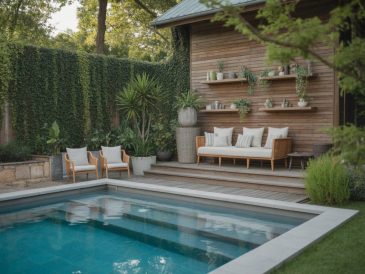
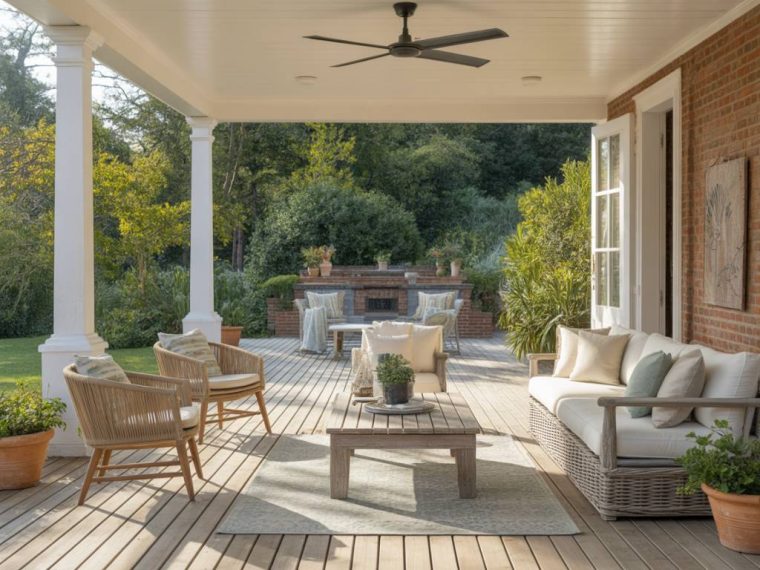
- Outdoor Furniture That Reflects Indoor Comfort: Think plush seat cushions, weather-resistant rugs, side tables for books and tea. The era of spartan patio seating is over – your outdoor space should invite you to linger.
- Covered Areas with Purpose: Pergolas, gazebos, or awning-covered lounges provide shelter from both sun and showers. Add pendant lighting or a softly buzzing overhead fan, and suddenly, your patio becomes part of your daily rhythm.
- Outdoor Kitchens & Dining: My own brick pizza oven sits beneath a cedar pergola, surrounded by climbing wisteria. Meals prepared and eaten here carry a flavour I can only call ‘sun-kissed rusticity’. An outdoor kitchen doesn’t have to be overstated—a simple prep station and grill setup work beautifully if designed thoughtfully.
Let There Be Light—Thoughtfully
Lighting can either fracture or fuse the indoor-outdoor experience.
Inside, make generous use of daylight through skylights, well-placed windows, and reflective surfaces. Outside, invest in layered lighting: warm-toned pathway lights, fairy lights in shrubbery, and task lighting near cooking zones. The aim is to ensure that once night falls, the visual journey continues without sudden stops or harsh transitions.
And don’t forget fire. There is something ineffably grounding about outdoor fire features—be it a built-in fire pit, a chiminea, or even a row of flickering candles. They flicker warmth and familiarity across the threshold of both realms.
Textures, Sounds & the Role of Water
The sensory experience is perhaps the most overlooked, yet most powerful part of seamless living.
Soft rustling leaves, the distant chirp of garden birds, the bright gurgle of a water feature—these sounds recalibrate our nervous systems far better than any playlist. A small fountain, rill, or even a babbling rock waterfall next to your patio can turn a simple garden room into a meditation space.
And textures—nothing invites deeper connection like tactile diversity. Woven throws, smooth stone pavers, the silky leaves of lamb’s ear plants brushed against bare ankles as you walk. Feeling is believing.
Seasonal Adaptability: Designing for All-Year Use
I won’t pretend British weather makes this integration easy. It asks for some ingenuity to maintain cohesion come November rains or February frost.
- Retractable Awnings & Weather-Proof Coverings: These provide year-round access to outdoor areas, no matter the forecast. I find myself using mine more times in early spring than I anticipated—wet daffodils still deserve an audience.
- Outdoor Heating: Whether you go for an elegant gas patio heater or a rustic wood-burning stove, warmth is key to stretching your enjoyment well into autumn and beyond.
- Flexible Furnishings: Choose outdoor furniture that’s easy to move, store, or cover. Water-repellent fabrics and quick-dry cushions are vital if you want to keep things spontaneous—dry seating shouldn’t be a luxury!
Ultimately, the goal isn’t to eliminate seasonality—it’s to celebrate it. Let winter’s sharp light stream in while you sip tea under fleece blankets. Let spring’s pink blossoms frame your interior through open French doors.
Practical Musings from the Garden Path
In my own journey, the most successful transformations have come not from grand architecture but from small intentional choices—aligning spaces with how I truly live. The herb planters just outside the kitchen window, placed so I can reach them while cooking. A low stone wall that doubles as garden seating and visual continuity. Even my much-maligned project of embedding solar lights within gravel paths (don’t ask… they worked eventually).
This unity of indoor and outdoor is not achieved overnight. It’s layered—like compost, like time. But with careful thought, it becomes a way of life—one where your home breathes, expands, and grows alongside the garden you love so dearly.
So I ask you, next time you step outside, what parts of your indoor world follow you? And what whispers from the garden might you invite in?